
SVCC Schnauzers &
Our Breeding Standard
Hello, I’m Isabelle!
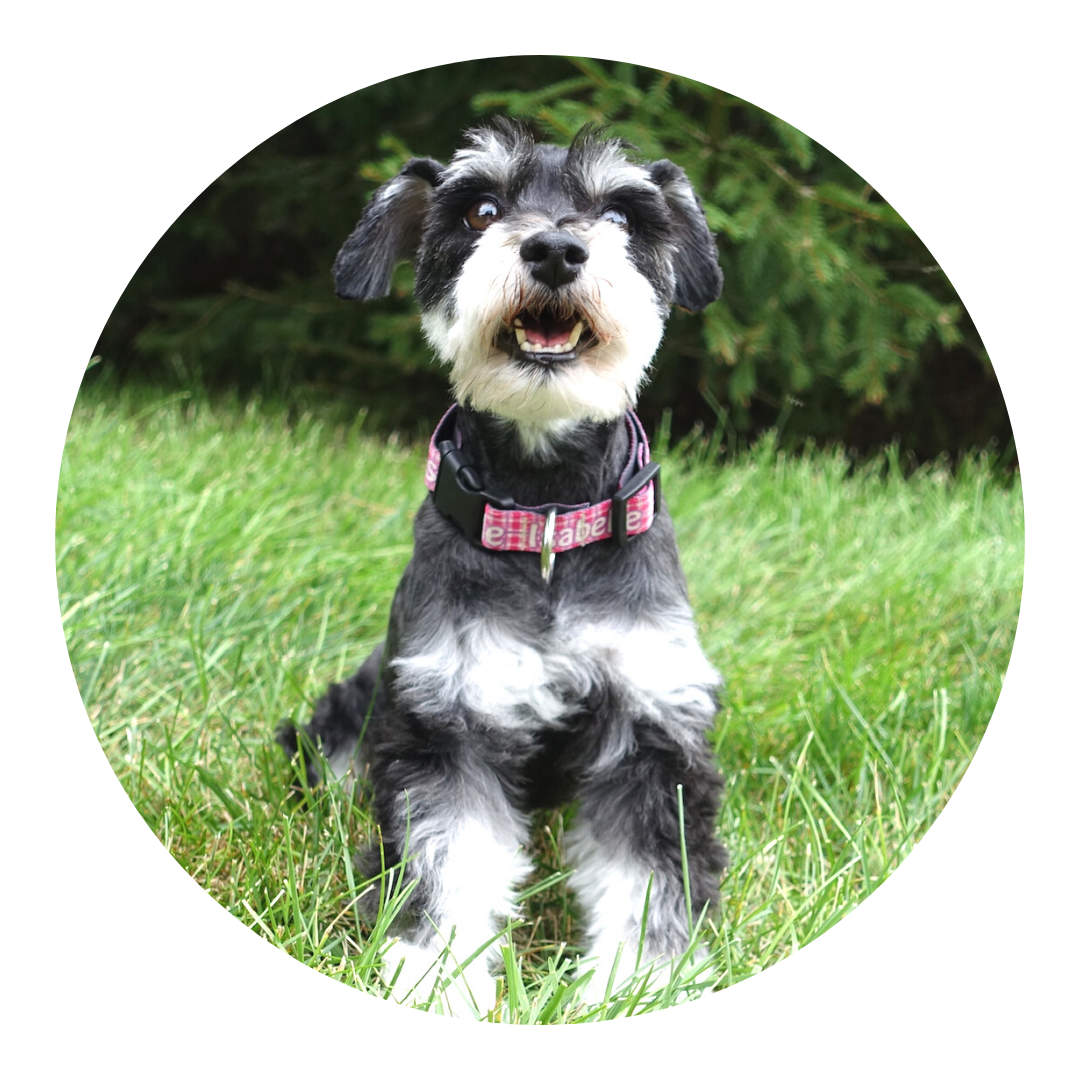
So that you may learn more to determine if the Miniature and Toy size Schnauzers are the right breed for you, our breeder, Shawn Kent Hayashi will share what you can expect from a Mini and Toy size Schnauzer and our breeding standards for our SVCC Schnauzers:
Our schnauzers are bred to go to homes where they will be adored and a blessing to those who love them. We breed and train both Miniature and Toy size schnauzers to be cherished family members.
What is a Mini Schnauzer? How is it different from a Toy Schnauzer?
The American Kennel Club (AKC) began to recognize Miniature Schnauzers in 1926. Miniature schnauzers are the smallest of the three Schnauzer breeds recognized by the AKC. Mini schnauzers are known for being healthy, long-lived, and non shedding. They are friendly, easy to travel with, and hypo allergenic which makes them an ideal family dog. Over one hundred years ago, Miniature Schnauzers were created - they were bred down from the larger varieties of Schnauzers. The schnauzer coat can be groomed with a traditional bushy beard and eyebrows which gives them a charming expression or they can be groomed to look like a teddy bear (we have examples of both styles of grooming in photos on this web site.) They were originally bred to be all-around family farm dogs, they are fearless without being aggressive. The Miniature Schnauzer is a bright, friendly, easy to train companion. They can live in any family setting from apartment life to suburban settings. Schnauzers are well known for getting along well with other animals and children. They make great alert dogs and can be trained as therapy dogs as well. The difference between Toy Schnauzers and Mini Schnauzers is their size. All show up as 100% Mini Schnauzer in their Embark DNA tests. Toy schnauzers are smaller than the Mini Schnauzer AKC standard in both height and weight. Both Toy and Mini size schnauzers can come colors such as cream, red and chocolate and parti colors in addition to the AKC standard colors of salt & pepper, black & silver, and black.
When we breed Schnauzers our first priority is great health!
Our SVCC schnauzer parents are 100% Mini Schnauzers that are DNA tested using Embark, to understand the 230+ known issues in dogs that Embark currently tests. (We do offer AKC registration on our puppies. AKC papers do not come automatically with the purchase of a puppy. Ask about this if AKC papers are important to you. The options for consideration are no registration, pet registration, or full AKC registration for breeders who we work with and there are extra costs for full breeding rights AKC registration papers.)
A Note About DNA Ancestry Results in Miniature Schnauzers
We believe in transparency about the information we receive from the Embark DNA testing reports.
On occasion, DNA ancestry testing of a registered Miniature Schnauzer may report a small percentage of ancestry associated with another breed, including Poodle. We have seen this a few times in DNA results within our own lines, despite parents being 100% Mini Schnauzer with known AKC Miniature Schnauzer pedigrees.
Interestingly, Embark has specifically addressed this issue in Miniature Schnauzers. Embark reports that it has seen purebred Miniature Schnauzers return Poodle ancestry despite no previous evidence of Poodle ancestry in their lineage and explains that updates to its reference databases can sometimes produce variations in breed ancestry results.
Embark also distinguishes genetic ancestry results from purebred status. Purebred status is based on pedigree and registration records; a DNA ancestry test provides additional genetic information but does not, by itself, establish or invalidate a dog's registered purebred status.
At SVCC Schnauzers, we therefore look at the whole picture. We consider pedigree and parentage, DNA ancestry information, genetic health testing, coat-color genetics, coefficient of inbreeding, and—equally important—our knowledge of the individual dogs and the generations behind them.
We share this information because we believe responsible breeding includes being transparent about both what genetic testing can tell us and its limitations.
This is not a breeding error. It is not the result of an accidental mating. It is genetic science working exactly as it should — surfacing information that wasn't visible before. Embark confirmed this explanation when we encountered it in our own program, and we shared the full story openly on our YouTube channel (search: "Shocking for Me! What is the Future of SVCC Schnauzers?").
What this means for your puppy: The health, temperament, trainability, hypoallergenic coat, and loving personality you are choosing an SVCC puppy for are unchanged. Our 10-Year Genetic Health Guarantee applies fully to every puppy. We simply believe you deserve to know this before you bring your puppy home, rather than being surprised if your own vet runs a second DNA panel and suggests there is a small percent of poodle showing up.
We are Schnauzer breeders — we are breeding AKC Registered Mini Schnauzers. We do not intentionally cross breeds, but occasionally (very rarely) modern DNA science has come back with “schnoodle.” We think integrity means telling you that.

Next, we focus on temperament.
SVCC Schnauzers are highly socialized and have a loving, lighthearted, whimsical, childlike attitude because of the way we interact with them in their time with us. Our schnauzer puppies are neurologically stimulated with touch and sound each day. They are intentionally exposed to a diverse group of people, households sounds, and experiences. Bright and intelligent, they are easy to train, and obedient when taught properly. At 8 weeks old, many of our schnauzer puppies begin our Prep School for additional training and some go on to Therapy Dog Certification training before going home with their new families.
Our SVCC Schnauzers are loyal companions for all ages, and make friends with other animals easily, because they were well-socialized and trained as puppies and young adults.

SVCC Schnauzer’s third criteria for breeding is size.
We breed Mini Schnauzers. Our Mini size schnauzers weigh 12+ pounds and our Toy size schnauzers weigh between 7-11 lbs. “Toy” indicates they are smaller in size than the AKC Standard for Mini Schnauzers. The AKC standard for a Mini Schnauzer is 12+ inches at the shoulders so a Toy schnauzer is smaller than that. Both Mini and Toy size schnauzers can be born in the same litter and we have mom and dads that are Mini Schnauzers and can produce both toy and mini sizes.
Our fourth criteria is color and coat type
Once health, temperament and appropriate size are established, we use our knowledge of inherited traits to thoughtfully plan for the colors and coat characteristics our families love. We specialize in the rarer red, wheaton, and chocolate schnauzer colors because that is what our customers ask for. We intentionally breed all our dogs using knowledge of DNA traits to produce the colors and coat types that are most requested on our SVCC Priority Reservation List.

Here’s more about the Schnauzer breed:
The body of our schnauzers is fine to medium boned. The SVCC Schnauzer is a terrier with a level back. The outline of the dog gives the appearance of a square, although the body length is slightly longer than the overall height. The tail is docked (or if the new owner requests before birth the tail may remain. If not docked, the tail is set high and carried over the body).
The coat is easy to comb, with a soft silky texture. The dog may be groomed in a Schnauzer cut or may have long flowing hair as a teddy bear or with a topknot on the head. (When long, the coat requires daily combing.)
Dewclaws are removed.
Nose is solid black or brown (not splotched or multi colored.)
This dog moves with confidence and pride. Its movement is graceful, smooth, and straightforward. Some say they even prance!
All Our Breeding Parents are
AKC Registered 100% Miniature Schnauzers
Disqualifications for breeding at SVCC Schnauzers:
If there was no Embark DNA testing for the known issues in dogs we don’t breed
Too small for healthy breeding or too large for our program
Poor temperament or aloof with people and other animals
Not easily trained
